Does Tractor Supply Have Argon Gas?
Let's address the main question directly: Tractor Supply Company does not consistently stock argon gas across all its locations. While individual stores might occasionally carry it, relying on Tractor Supply as a primary source for argon is unreliable. This makes exploring alternative suppliers crucial for farmers needing this essential gas for sustainable agricultural practices.
Why Argon Matters in Sustainable Agriculture
Argon gas, a colorless, odorless inert gas, plays a surprisingly vital role in modern sustainable farming. Its primary application is as a shielding gas in welding, a process essential for maintaining and repairing farm equipment. By preventing oxidation and contamination during welding, argon ensures stronger, longer-lasting repairs on tractors, harvesters, irrigation systems, and other vital machinery. This translates to less equipment downtime, reduced replacement costs, and ultimately, less waste—a significant contribution to sustainable farming practices. A single strong weld, thanks to argon's protective properties, can extend the lifespan of equipment, reducing both environmental impact and operational costs.
Where to Source Argon Gas: Alternatives to Tractor Supply
Given the inconsistent availability of argon at Tractor Supply, several reliable alternatives exist:
Local Welding Supply Shops: These businesses are your best bet. They specialize in welding gases, often offering a wide selection of argon tank sizes, personalized service, and potentially bulk discounts. Their expertise ensures they can answer your questions regarding safe handling and usage. Supporting local businesses also fosters community relationships.
Industrial Gas Suppliers: For larger-scale operations requiring significant quantities of argon, industrial gas suppliers provide a reliable and efficient source. They typically offer bulk discounts and streamlined delivery systems for larger orders. While they might lack the personalized service of local shops, their efficiency benefits large farms.
Online Retailers: While online retailers offer convenience and potentially competitive pricing, it's critical to factor in shipping costs and delivery times. Always verify the supplier's reputation and ensure safe shipping practices to avoid potential hazards.
Remember to request quotes from multiple suppliers to compare prices, volume discounts, and delivery fees to find the most cost-effective option.
Best Practices for Sustainable Argon Gas Use
Sustainable agriculture extends to every aspect of the operation, including the responsible use of resources like argon gas. Minimizing waste and maximizing efficiency are equally crucial for both economic and environmental reasons.
Step 1: Safe Storage: Store argon cylinders in a cool, dry, well-ventilated area, away from heat sources and direct sunlight. Securely fasten the cylinders to prevent accidental tipping or damage.
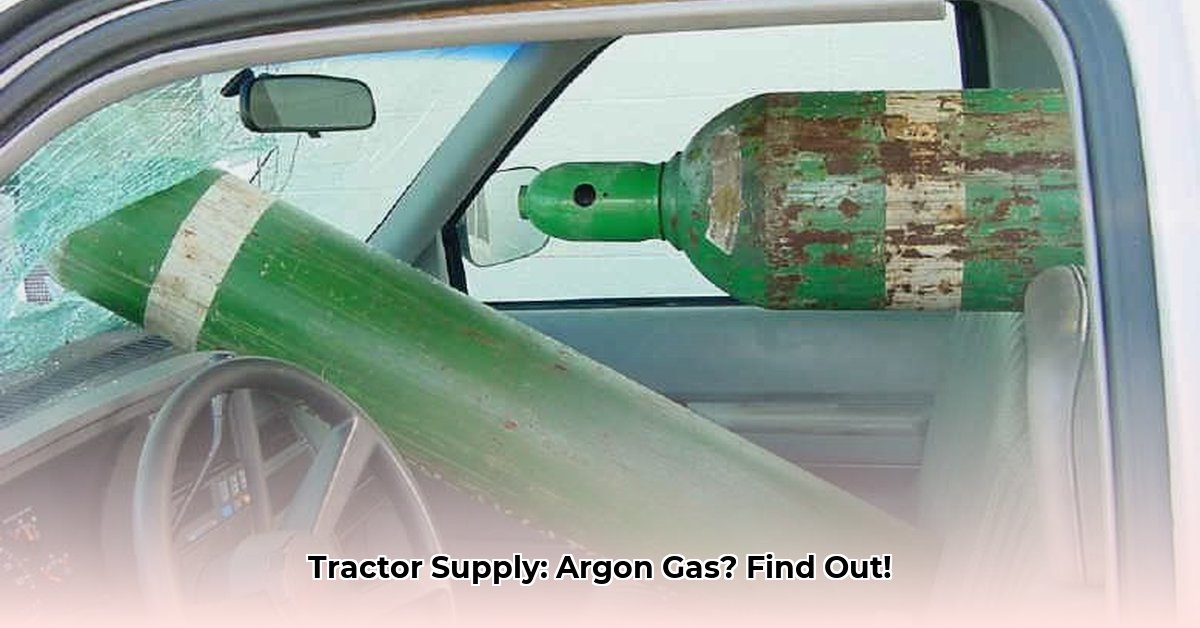
Step 2: Safe Transportation: Always transport argon cylinders upright and securely fastened in a vehicle. Never lay them on their side. Use a cylinder cart or appropriate straps to safeguard against movement during transport.
Step 3: Efficient Usage: Before using, always read and follow the manufacturer's instructions. Good ventilation is vital, especially when welding indoors. Employ techniques like pulse welding whenever possible to reduce gas consumption without compromising weld quality.
Step 4: Responsible Disposal: Contact your supplier or local waste management authority for instructions on properly disposing of empty argon cylinders. Proper disposal protects the environment and ensures compliance with regulations.
Key Takeaways: Sustainable Argon Use in Agriculture
- Reliability: Tractor Supply isn't a reliable source for argon gas.
- Efficient Sourcing: Local welding supply shops and industrial gas suppliers offer reliable alternatives.
- Sustainable Practices: Safe handling, storage, and disposal are vital for environmental responsibility and economic efficiency. Implementing techniques like pulse welding further minimizes gas waste.
By adopting these strategies, farmers can ensure a reliable supply of argon gas while minimizing environmental impact and maximizing the efficiency of their operations. Remember, sustainable farming isn't just about what you grow; it's also about how you maintain your equipment and manage your resources.